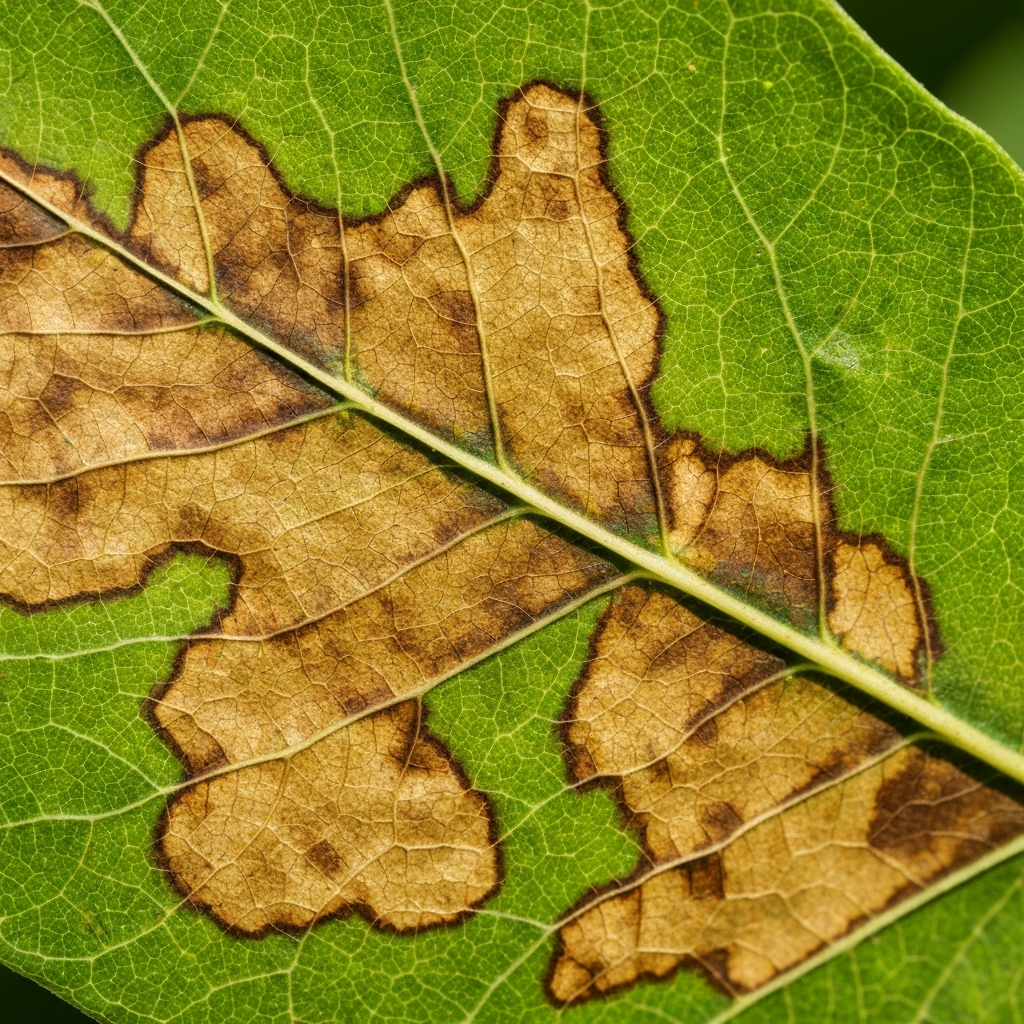
Anthracnose
A common springtime fungal disease that causes severe leaf blight and defoliation, particularly in California Sycamores and Oaks during cool, wet weather.
The Spring Defoliator
Anthracnose is one of the most visible and alarming tree diseases in Southern California. Every spring, homeowners panic when their beautiful California Sycamores suddenly turn brown and drop all their new leaves.
What causes the problem? The fungus overwinters in fallen leaves and infected twigs. When spring brings cool temperatures and rain, the spores splash onto the newly emerging leaves, causing rapid infection.
Long-term consequences: Fortunately, Anthracnose is rarely fatal to mature, healthy trees. It is primarily an aesthetic issue. The tree will expend extra energy to push out a second set of leaves once the weather warms up. However, repeated severe infections year after year can weaken the tree, making it susceptible to secondary pests like the Shot Hole Borer.
Disease Profile
- Pathogen TypeFungus
- Primary TargetsSycamores, Oaks
- Environmental TriggerCool, Wet Springs
- Primary SymptomLeaf Blight / Drop
- LethalityLow (Mostly Aesthetic)
Warning Signs
Brown Leaf Veins
The most classic symptom is irregular brown or black dead patches on the leaves, usually following the leaf veins.
Sudden Leaf Drop
In severe cases, the tree will suddenly drop almost all of its newly formed spring leaves, carpeting the ground in brown foliage.
Twig Dieback
The fungus can also infect the small twigs, causing them to die back and create a "witches' broom" appearance (clusters of small twigs) over time.
What Can Be Done?
While Anthracnose is rarely fatal, proactive management keeps your estate trees looking beautiful and prevents long-term stress.
- Preventative FungicidesTargeted treatments applied in early spring, just as the buds are breaking, can protect the new leaves from infection.
- SanitationRaking and removing all fallen leaves in autumn removes the fungal spores that would otherwise overwinter and reinfect the tree.
- Canopy ThinningProper structural pruning improves air circulation and sunlight penetration, allowing leaves to dry faster and reducing fungal growth.
When to Call an Arborist
If your tree is suffering from severe defoliation every spring, it is expending massive amounts of energy to recover. Over time, this stress invites deadly pests.
Schedule an Assessment