Powdery Mildew
A widespread fungal disease that coats leaves in a white, powdery dust, stunting new growth and reducing the aesthetic value of landscape trees.
The White Dust of Spring and Fall
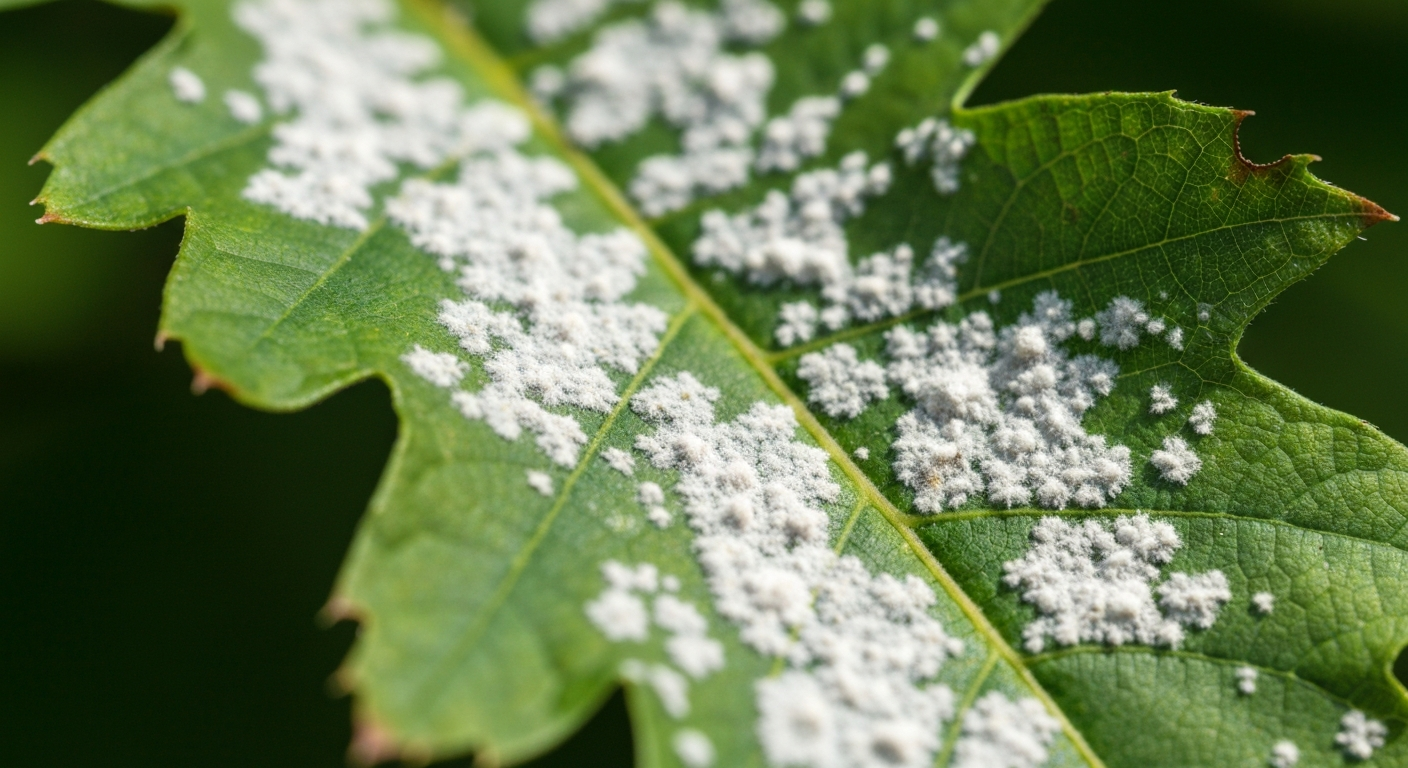
Powdery mildew is one of the most recognizable plant diseases. While it looks like someone dusted your tree with flour, it is actually a superficial fungus living on the surface of the plant tissue.
What causes the problem? Unlike many fungi that need rain to spread, powdery mildew spores are carried by the wind and thrive in high humidity combined with dry, warm weather—making the coastal and valley microclimates of Southern California ideal breeding grounds.
Long-term consequences: In mature trees, powdery mildew is rarely fatal. However, because it covers the leaf surface, it reduces photosynthesis. Severe infections can cause leaves to curl, turn yellow, and drop prematurely. On young trees or new growth, it can cause severe stunting and distortion.
Disease Profile
- Pathogen TypeFungus
- Primary TargetsSycamores, Crape Myrtles, Oaks
- Environmental TriggerHigh Humidity, Warm Days
- Key IndicatorWhite/Gray Powdery Dust
- LethalityLow (Aesthetic/Stress)
Warning Signs
White Powder
Distinct white or light gray powdery spots appear on the upper or lower surfaces of leaves, eventually coating the entire leaf.
Distorted New Growth
Newly emerging leaves and shoots may appear twisted, curled, or stunted as the fungus attacks the tender tissue.
Premature Leaf Drop
Heavily infected leaves may turn yellow or brown and fall off the tree earlier than normal in the season.
What Can Be Done?
Managing powdery mildew involves changing the microclimate around the leaves and protecting vulnerable new growth.
- Canopy ThinningProfessional pruning improves air circulation and sunlight penetration, making the environment less favorable for the fungus.
- Fungicide SpraysPreventative treatments applied as buds break in spring can protect the new foliage before the fungus establishes itself.
- Balanced NutritionAvoiding high-nitrogen fertilizers that push excessive soft growth helps reduce the tree's susceptibility.
When to Call an Arborist
If powdery mildew is causing severe aesthetic issues on high-value landscape trees, or if the canopy is so dense it requires professional structural pruning to improve airflow.
Schedule an Assessment