Shot Hole Borer
An invasive, wood-boring beetle that farms deadly fungus inside Southern California's most valuable trees. Early detection and specialized trunk injections are critical for survival.
The Beetle-Fungus Complex
The Polyphagous Shot Hole Borer (PSHB) is an invasive pest that poses a severe threat to Southern California's urban forests. It heavily targets California Sycamores, Coast Live Oaks, and Box Elders.
What causes the problem? The beetle itself does not eat the wood. Instead, it bores into the tree to create galleries where it farms a pathogenic fungus (Fusarium euwallaceae). The beetle feeds on the fungus, but the fungus rapidly colonizes the tree's vascular tissue.
Long-term consequences: As the fungus grows, it blocks the xylem, preventing water from reaching the canopy. This causes rapid branch dieback and, if left untreated, the eventual death of the tree. Because the beetles multiply quickly, a single infested tree can threaten an entire neighborhood.
Pest Profile
- Pest TypeAmbrosia Beetle
- Associated PathogenFusarium Fungus
- Primary TargetsSycamores, Oaks
- Spread MethodFlight, Moved Firewood
- LethalityHigh (if untreated)
Warning Signs
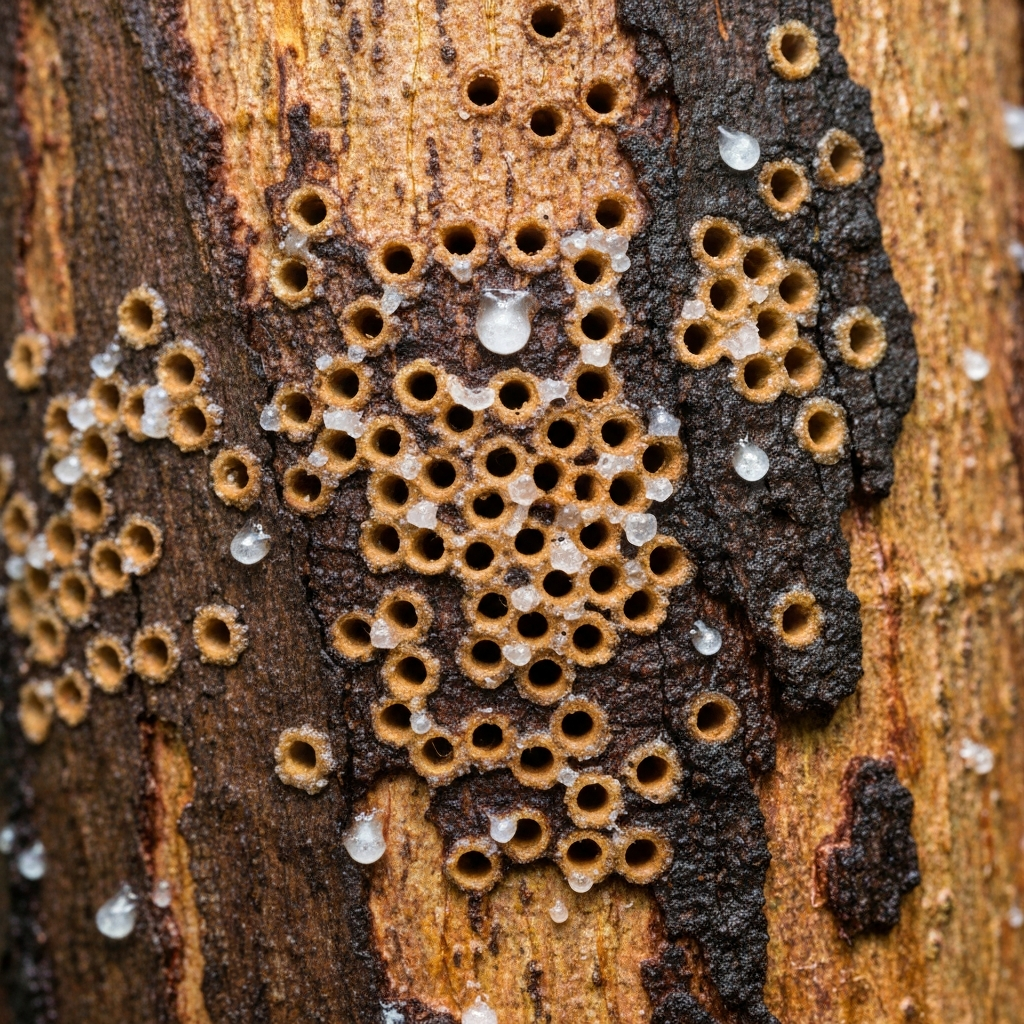
Perfectly Round Holes
Look for tiny, perfectly round entry holes on the trunk and main branches, roughly the size of the tip of a ballpoint pen (0.03 inches).
Staining & Exudate
The tree's response varies by species. Sycamores often show dark, wet staining. Oaks may produce a white, sugary exudate around the holes.
Dieback
As the fungus blocks water flow, entire branches will wilt and die back. This is often the first symptom homeowners notice.
What Can Be Done?
Topical sprays do not work because the beetles live deep inside the wood. Treatment requires advanced Plant Health Care techniques.
- Trunk InjectionsWe inject a specialized combination of insecticide and fungicide directly into the tree's vascular system to kill the beetles and suppress the fungus.
- Sanitation PruningHeavily infested branches must be carefully pruned and properly disposed of (chipped and solarized) to reduce the beetle population.
- Tree RemovalIf a tree is too heavily infested, it acts as an amplifier, breeding millions of beetles. Removal is often necessary to protect surrounding healthy trees.
When to Call an Arborist
If you see tiny holes or staining on your Sycamore or Oak, do not wait. Shot Hole Borer populations can explode in a matter of weeks during warm weather.
Schedule an Assessment