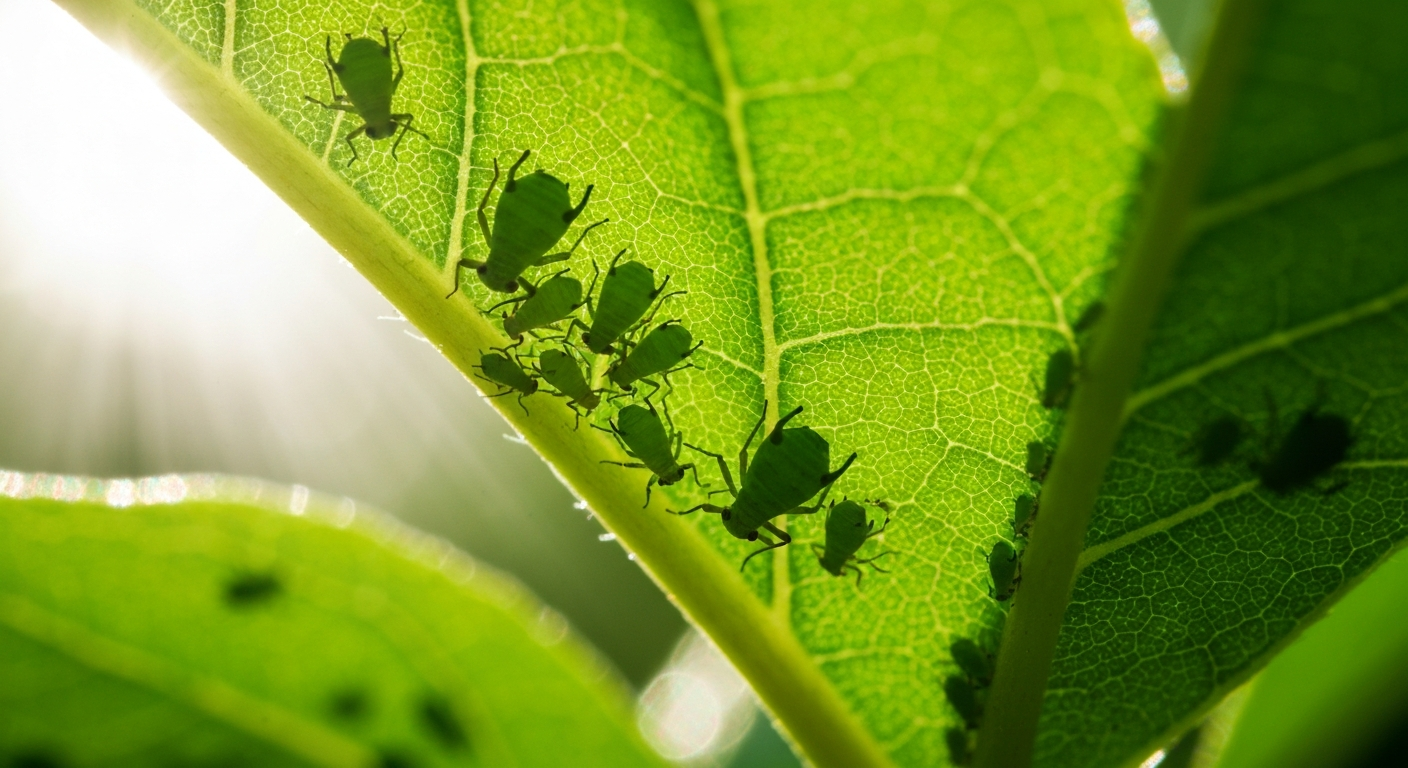
Aphids
Tiny, rapidly multiplying pests that drain sap from new growth, curl leaves, and create sticky honeydew messes on properties.
The Springtime Sap Suckers
Aphids are one of the most common and frustrating pests for Southern California property owners. Because they reproduce incredibly fast, a small population can explode into a massive infestation in just a matter of days during the spring flush of new growth.
What causes the problem? Aphids target the tender, nutrient-rich new growth of trees and shrubs. They use needle-like mouthparts to pierce the plant tissue and continuously suck out the sap.
Long-term consequences: While aphids rarely kill mature trees outright, they cause severe aesthetic damage. Leaves curl, yellow, and drop prematurely. The massive amounts of sticky honeydew they excrete coat everything below, leading to the growth of black sooty mold. Over time, chronic aphid infestations stunt tree growth and deplete the tree's energy reserves.
Pest Profile
- Pest TypeSap-Sucking Insect
- Primary TargetsNew Growth, Wide Variety
- Key IndicatorCurled Leaves / Honeydew
- Secondary IssueSooty Mold / Ants
- LethalityLow (High Aesthetic Damage)
Warning Signs
Curled or Puckered Leaves
New leaves appear distorted, curled inward, or puckered. If you unroll the leaf, you will often find clusters of tiny insects inside.
Sticky Honeydew & Soot
A sticky glaze coats the leaves and everything beneath the tree, often followed by the development of black, powdery sooty mold.
Heavy Ant Activity
Trails of ants marching up and down the trunk are a strong indicator that they are farming an aphid or scale population in the canopy.
What Can Be Done?
Effective aphid control requires addressing the pest population, the ant protectors, and the overall vigor of the tree.
- Systemic TreatmentsProfessional soil injections provide long-lasting control by making the tree's sap toxic to the feeding aphids without harming beneficial predators.
- Ant ManagementControlling the ants at the base of the tree removes the aphids' bodyguards, allowing natural predators like ladybugs to do their job.
- Horticultural OilsTargeted foliar sprays can quickly knock down severe populations and help wash away honeydew and sooty mold.
When to Call an Arborist
If the tree is too large to treat with a hose, if the honeydew is creating a mess on your property, or if the tree's growth is stunted, professional Plant Health Care is the most effective solution.
Schedule an Assessment