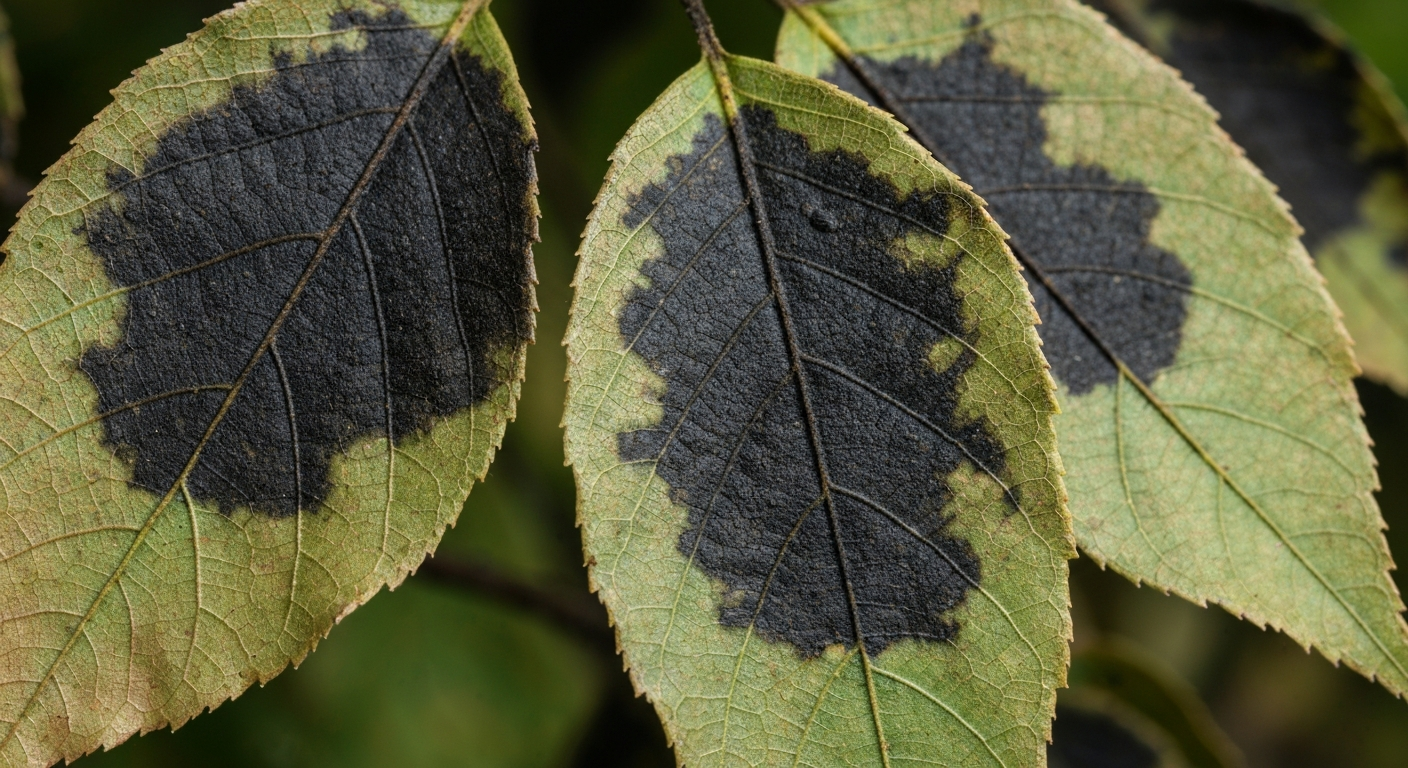
Sooty Mold
A black, powdery fungus that grows on the sticky honeydew secreted by insects, blocking sunlight and weakening landscape trees.
A Symptom, Not the Disease
When homeowners see their tree turning black, they naturally assume the tree has a terrible fungal infection. However, sooty mold is actually a secondary problem. It is the clearest indicator that your tree is infested with sap-sucking insects.
What causes the problem? Insects like aphids, scale, and whiteflies feed on the tree's sap and excrete a sugary, sticky substance called honeydew. The sooty mold spores, which are always present in the air, land on this honeydew and begin to grow, using the sugar as food.
Long-term consequences: While the mold doesn't eat the leaf, a thick layer of black soot acts like a shade cloth, blocking the sun. This prevents the tree from photosynthesizing, starving it of energy. Combined with the stress of the insect infestation, this can cause significant decline and dieback.
Profile
- TypeSurface Fungus
- Root CauseAphids, Scale, Whiteflies
- Primary TargetsCitrus, Ficus, Crape Myrtles
- Key IndicatorBlack, Powdery Leaves
- LethalityLow (Indicates Pest Stress)
Warning Signs
Black Leaves
Leaves, stems, and branches appear to be covered in a dark layer of soot. You can often scrape the black layer off with your fingernail.
Sticky Honeydew
The leaves feel sticky to the touch. Patios, walkways, or cars parked beneath the tree will also be coated in this sticky sap.
Ant Infestations
Heavy ant traffic up and down the trunk is a massive red flag. They are there to harvest the honeydew from the insects.
What Can Be Done?
To cure sooty mold, you must ignore the mold and attack the insects. Once the food source is gone, the mold dies.
- Insect ControlIdentifying and treating the specific pest (aphids, scale, etc.) via systemic or topical insecticides is the primary cure.
- Ant ManagementStopping ants from accessing the canopy allows natural predators to help control the honeydew-producing pests.
- Horticultural WashesOnce the insects are controlled, gentle horticultural soaps or oils can help wash away the remaining mold and honeydew.
When to Call an Arborist
If your tree is turning black, you have an active insect infestation. We can identify the pest and implement a Plant Health Care program to eliminate it and restore the tree's vigor.
Schedule an Assessment