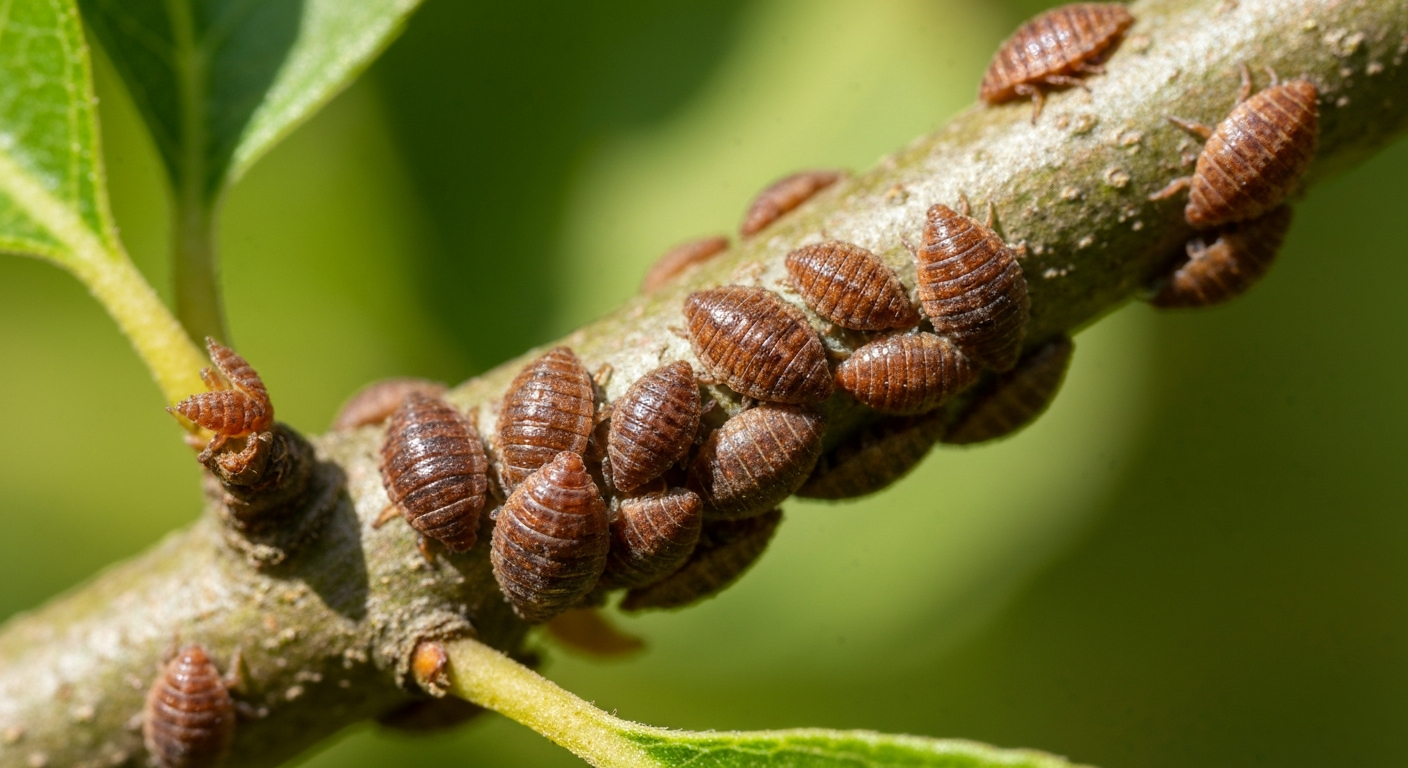
Scale Insects
Sap-sucking pests that drain tree vitality, cause branch dieback, and create sticky messes on properties throughout Southern California.
The Silent Drain on Tree Health
Scale insects are masters of camouflage. Because they don't look or act like typical bugs—often appearing as immobile bumps on twigs or leaves—homeowners frequently miss the infestation until the tree is in serious decline.
What causes the problem? Scale insects insert their piercing mouthparts into the tree's vascular system and continuously suck out the nutrient-rich sap. This deprives the tree of the energy it needs to grow, defend itself, and survive.
Long-term consequences: If left untreated, severe scale infestations cause yellowing leaves, premature leaf drop, and progressive branch dieback. The sticky honeydew they excrete also promotes the growth of sooty mold, which blocks photosynthesis and further weakens the tree. Over time, the stress can kill the tree or make it vulnerable to secondary, lethal pests like bark beetles.
Pest Profile
- Pest TypeSap-Sucking Insect
- Primary TargetsCitrus, Ficus, Oaks, Olives
- Key IndicatorSticky Honeydew / Bumps
- Secondary IssueSooty Mold
- LethalityModerate to High (if ignored)
Warning Signs
Sticky Surfaces
Leaves, patios, cars, or walkways beneath the tree become coated in a sticky, sap-like substance called honeydew.
Black Sooty Mold
A black, powdery fungus grows on the honeydew, turning leaves and branches dark and blocking vital sunlight.
Bumps on Twigs
Small, immobile bumps (white, brown, or black) clustered along twigs, branches, or the undersides of leaves.
What Can Be Done?
Because adult scale insects are protected by a waxy armor, timing and treatment methods must be precise to achieve control.
- Systemic TreatmentsSoil or trunk injections deliver targeted control directly into the tree's vascular system, ensuring the scale ingests the treatment when feeding.
- Horticultural OilsDormant oil sprays applied at the right time can smother overwintering scale and target the vulnerable "crawler" stage in spring.
- Ant ControlManaging ant populations at the base of the tree prevents them from protecting the scale insects from natural predators.
When to Call an Arborist
If your tree is dripping honeydew, turning black with mold, or showing signs of dieback, the infestation is already severe. Professional diagnosis and treatment are required.
Schedule an Assessment