Oak Root Fungus
One of the most destructive soil-borne pathogens in Southern California. Often triggered by improper summer irrigation, this silent killer destroys the structural roots of mature estates trees.
The Silent Threat Below Ground
Oak Root Fungus, commonly known as Armillaria root rot, is a devastating disease that attacks the cambial tissue of roots and the lower trunk. In Southern California landscapes—particularly in areas like Thousand Oaks, Ojai, and Calabasas—it is the leading cause of decline in mature native oaks.
What causes the problem? Armillaria is naturally present in many California soils, living harmlessly on dead wood. However, when native drought-tolerant trees are subjected to warm, moist soil conditions—typically from summer lawn irrigation—the fungus becomes highly aggressive and attacks living roots.
Long-term consequences: Because the fungus destroys the structural roots, infected trees are highly prone to sudden, catastrophic failure, often toppling over with no warning, even on windless days. Once the fungus girdles the main trunk, the tree cannot be saved.
Disease Profile
- Pathogen TypeFungus
- Primary TargetsOaks, Sycamores
- TransmissionRoot Contact, Soil
- Environmental TriggerSummer Soil Moisture
- LethalityVery High
Warning Signs
Armillaria works underground, so symptoms often appear in the canopy only after significant root damage has occurred.
Mycelial Fans
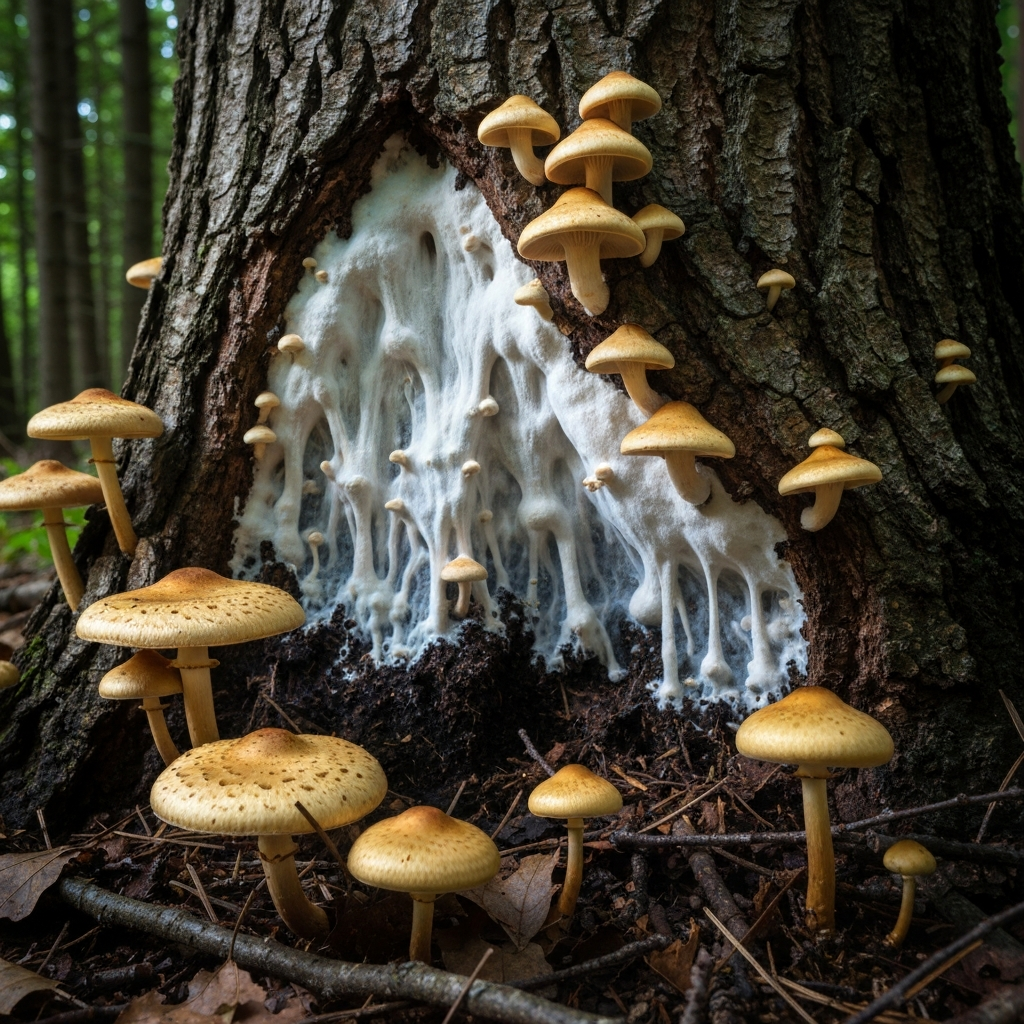
If you peel back the bark at the soil line of a dying tree, you may find thick, white, fan-shaped fungal mats (mycelium) growing between the bark and the wood.
Honey Mushrooms
In late fall or early winter, clusters of honey-colored mushrooms may erupt at the base of the trunk or from major roots.
Canopy Decline
Leaves may turn yellow, drop prematurely, or the canopy may thin out significantly. Entire branches may die back rapidly during the heat of summer.
What Can Be Done?
While there is no true cure for Armillaria once established, aggressive Plant Health Care can significantly extend the life of an infected tree.
- Root Collar ExcavationUsing an air spade, we remove soil from the base of the trunk. Armillaria cannot survive exposure to air, so this halts its upward movement.
- Irrigation ModificationAll summer watering within the drip line must stop immediately. We help homeowners redesign their landscape irrigation to keep the root zone dry during warm months.
- Fungicide TreatmentsTargeted systemic fungicides, applied by our Licensed Pest Control Operator, can suppress the fungus and support the tree's immune system.
When to Call an Arborist
Do not wait for mushrooms to appear. If your mature oak tree is showing signs of stress, or if you recently purchased a property with irrigated oaks, call Arborist Crew Services immediately.
Our Certified Arborists will perform a thorough diagnostic assessment, including a root collar inspection, to determine if Armillaria is present.
Schedule an Assessment