Protecting Southern California's
Most Valuable Trees
Healthy trees don't happen by accident. We provide science-based care, customized treatment programs, and expert diagnosis by Certified Arborists.
What is Plant
Health Care?
Plant Health Care (PHC) is an ongoing management philosophy rather than a single treatment. It is a comprehensive, holistic approach to maintaining the vitality, structure, and beauty of your landscape.
In a natural forest, trees thrive in a self-sustaining ecosystem. Leaves fall, decompose, and return nutrients to the soil. The soil is porous, rich in organic matter, and teeming with beneficial fungi and bacteria.
In our urban and suburban landscapes—from the coastal estates of Malibu to the inland valleys of Thousand Oaks—we disrupt this cycle. We rake up leaves, plant competitive turf grass over tree roots, compact the soil with foot traffic, and alter natural drainage.
"Our Plant Health Care programs are designed to recreate the natural forest environment beneath the soil, strengthening the tree from the roots up."
By focusing on prevention, monitoring, soil biology, root health, proper nutrition, and integrated pest management, we ensure your trees are equipped to handle the unique stresses of Southern California's climate.
Why Trees Decline
Trees in Southern California face a unique set of challenges. Understanding the root cause of stress is the first step in reversing the decline.
Drought & Water Stress
Prolonged lack of deep watering forces trees to abandon their canopies to save the root system.
Compacted Soil
Foot traffic and machinery squeeze oxygen out of the soil, slowly suffocating the tree's feeder roots.
Construction Damage
Trenching cuts crucial roots, while grade changes bury the trunk flare, leading to delayed but fatal decline.
Overwatering
Constant shallow watering, especially near the trunk, drowns roots and invites deadly Oak Root Fungus.
Poor Pruning
Topping and lion's-tailing strip the tree of its food-producing leaves and create permanent structural defects.
Insects & Disease
Stressed trees emit chemical signals that attract borers, bark beetles, and opportunistic fungal pathogens.
Signs Your Tree Needs Help
Trees communicate their stress through visible symptoms. If you notice any of these signs, it's time to call a Certified Arborist.
Yellowing Leaves (Chlorosis)
Often indicates a nutrient deficiency, poor drainage, or high soil pH preventing iron uptake.
Sparse Canopy
A sign of root decline, soil compaction, or inadequate watering leading to branch dieback.
Dead Branches
Can be caused by fungal disease, borer insects, or structural failure requiring immediate attention.
Slow Growth
Usually points to poor soil conditions, lack of nutrients, or competition from surrounding turf.
Insect Infestations
Scale, aphids, and borers that feed on sap or wood, weakening the tree and spreading disease.
Root Disease
Fungal pathogens like Oak Root Fungus (Armillaria) that destroy the root system from the ground up.
Compacted Soil
Prevents oxygen and water from reaching roots, effectively suffocating the tree over time.
Construction Damage
Severed roots or changed soil grades during renovations that cause delayed but severe tree decline.
Drought Stress
Insufficient deep watering leading to scorched leaves, premature leaf drop, and susceptibility to pests.
Leaning Trees
Sudden leaning indicates root failure or severe structural weakness, requiring immediate assessment.
Root Flare Problems
Buried root collars invite rot and disease. The trunk flare should always be visible above the soil.
Weak Structure
Co-dominant stems and included bark create high-risk failure points during Southern California wind events.
Our Diagnostic Process
We practice true arboriculture—not just selling fertilizer. Every treatment plan begins with a rigorous, science-based evaluation of the tree and its environment.
Visual Inspection
A comprehensive 360-degree canopy, trunk, and root flare assessment.
Site History
Reviewing recent construction, irrigation changes, weather patterns, and past treatments.
Species Identification
Confirming the exact species to understand its specific biological requirements and common threats.
Pest & Disease Evaluation
Checking for exit holes, frass, fungal conks, leaf spots, and signs of decay.
Soil & Root Assessment
Evaluating soil moisture, compaction levels, pH, and exposing the root collar if necessary.
Diagnosis
Synthesizing all data to pinpoint the exact primary and secondary causes of decline.
Written Recommendations
Providing a clear, science-based explanation of the issue and the prognosis.
Customized Treatment Plan
Developing a targeted protocol using the most effective, least toxic methods available.
Ongoing Monitoring
Establishing a schedule to track recovery, adjust treatments, and ensure long-term success.
Plant Health Care Services
As licensed Pest Control Operators (PCO) and Certified Arborists, we have the legal authority and scientific knowledge to implement advanced treatments that most tree companies cannot legally offer.
Deep Root Fertilization
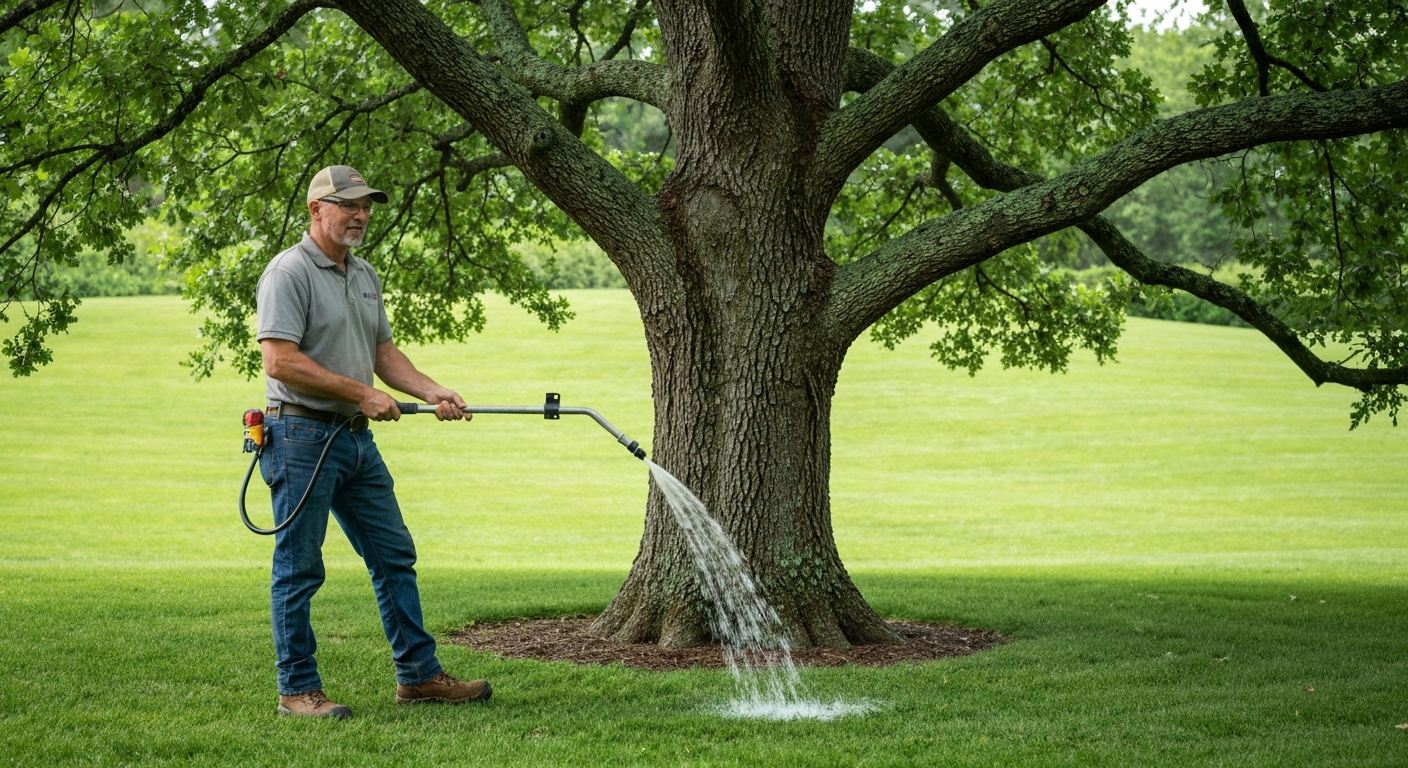
High-pressure injection delivers custom nutrient blends directly to the root zone, bypassing compacted soil for maximum uptake and immediate vitality.
Tree Injections
Fast, targeted delivery of vital nutrients, fungicides, and insecticides directly into the tree's vascular system without chemical drift.
Soil Testing & Analysis
Comprehensive laboratory testing to identify exact nutrient deficiencies, pH imbalances, and soil composition issues before creating a treatment plan.
Disease Diagnosis
Expert identification of fungal infections, bacterial diseases, and root rot by our Certified Arborists, followed by targeted mitigation strategies.
Integrated Pest Management
Science-based pest control strategies that protect your trees while minimizing environmental impact.
Growth Regulators
Specialized treatments that slow canopy growth while redirecting the tree's energy into root development, drought resistance, and disease defense.
Root Zone Care
Air spading, root collar excavation, and mulching to relieve soil compaction, prevent girdling roots, and improve oxygen flow to the root system.
Annual Monitoring
Scheduled inspections by Certified Arborists to catch early signs of stress, adjust irrigation, and ensure long-term health and structural integrity.
Common Southern California Tree Problems
Different species face completely different threats. From the coastal fog of Montecito to the dry heat of Calabasas, we understand the specific challenges facing your exact trees.
Oak Trees
Highly susceptible to Oak Root Fungus (Armillaria) from summer overwatering, Goldspotted Oak Borer, and sudden branch drop.
Palm Trees
Prone to Fusarium Wilt, Pink Rot, and severe nutrient deficiencies (potassium, magnesium) in poor soils.
Olive Trees
Often battle Olive Knot (a bacterial disease), Verticillium Wilt, and scale insects that produce messy honeydew.
Sycamores
Regularly affected by Sycamore Anthracnose in wet springs, leading to early leaf drop, and Polyphagous Shot Hole Borer.
Pines
Canary Island and Monterey Pines face devastating attacks from Bark Beetles and Pitch Canker during drought stress.
Eucalyptus
Threatened by the Eucalyptus Longhorned Borer, Lerp Psyllid, and sudden structural failure due to shallow roots.
Coral Trees
Extremely brittle wood requiring careful weight reduction, and highly susceptible to the Erythrina Gall Wasp.
Jacaranda
Often suffer from Glassy-winged Sharpshooter infestations, root rot in heavy clay, and structural issues if poorly pruned.
Ficus
Aggressive surface roots cause hardscape damage, while the canopy is prone to Cuban Laurel Thrips and Sooty Mold.
Fruit Trees
Citrus and avocados battle root rot, Asian Citrus Psyllid, nutrient lockout (chlorosis), and require precise seasonal pruning.
Plant Health Care Calendar
Proactive care means doing the right thing at the right time. Here is how we manage the seasonal needs of Southern California landscapes.
Spring
- • Apply early-season fertilizers to support new leaf development.
- • Monitor for aphids, caterpillars, and early fungal outbreaks.
- • Apply preventative treatments for Sycamore Anthracnose.
- • Inspect irrigation systems before the heat arrives.
Summer
- • Monitor for drought stress and adjust deep watering schedules.
- • Watch for aggressive summer pests like spider mites and scale.
- • Avoid watering native oaks near the trunk to prevent fungus.
- • Apply moisture management treatments to high-value trees.
Fall
- • Apply Deep Root Fertilization to help trees recover from summer stress.
- • Conduct structural inspections before winter wind events.
- • Treat for overwintering pests and apply soil amendments.
- • Plan dormant pruning schedules for fruit and deciduous trees.
Winter
- • Apply dormant horticultural oils to smother overwintering insect eggs.
- • Perform structural pruning while the canopy architecture is visible.
- • Conduct root collar excavations and air spading while soil is moist.
- • Apply preventative fungicides for spring-blooming diseases.
Why Arborist Crew Services?
We are not just a tree trimming company. We are a team of dedicated arboriculturists focused on the long-term preservation of Southern California's finest estates.
- ISA Certified Arborists on staff
- Licensed Pest Control Operator (PCO)
- Customized, science-based treatment plans
- Focus on long-term relationships and monitoring
- Specialists in luxury estates, HOAs, and commercial properties
- Over 40 years of experience serving Southern California
Ready to Protect Your Trees?
Schedule a comprehensive property assessment with one of our Certified Arborists today. We'll diagnose the issues and build a customized Plant Health Care plan for your landscape.
Get Your Free ConsultationFrequently Asked Questions
Related Resources
Start Your PHC Program
Don't wait for your trees to show signs of severe decline. Proactive care is the key to a thriving landscape.
Schedule Your Assessment