Watering Mature
Oak Trees
The delicate balance of hydrating native Southern California oaks without causing fatal root disease.
The Golden Rule of Oak Care
In Southern California, more mature oaks are killed by overwatering than by drought. Native species like the Coast Live Oak and Valley Oak evolved to thrive in a Mediterranean climate characterized by wet winters and long, completely dry summers.
The Danger Zone
Introducing water to the base of an oak tree during the warm summer months creates the perfect breeding ground for Armillaria mellea (Oak Root Fungus) and Phytophthora (Crown Rot). Once established, these diseases are incredibly difficult to stop and often prove fatal.
How and When to Water
Under normal conditions, an established, mature native oak requires zero summer irrigation. However, during years of extreme, prolonged drought, supplemental watering may be necessary to prevent severe stress. If you must water, follow these strict guidelines:
- 1Never Water Near the TrunkKeep the inner zone (from the trunk out to about half the distance to the drip line) completely bone dry year-round.
- 2Water at the Drip LineApply water only in the outer half of the canopy area, where the absorbing roots are located.
- 3Soak Slowly and DeeplyUse soaker hoses or drip emitters. The water needs to penetrate 18 to 24 inches into the soil. Surface watering only encourages shallow root growth.
- 4Water InfrequentlyIf supplemental water is needed, apply it once a month or less during the dry season. Allow the soil to dry out completely between waterings.
Landscaping Under Oaks
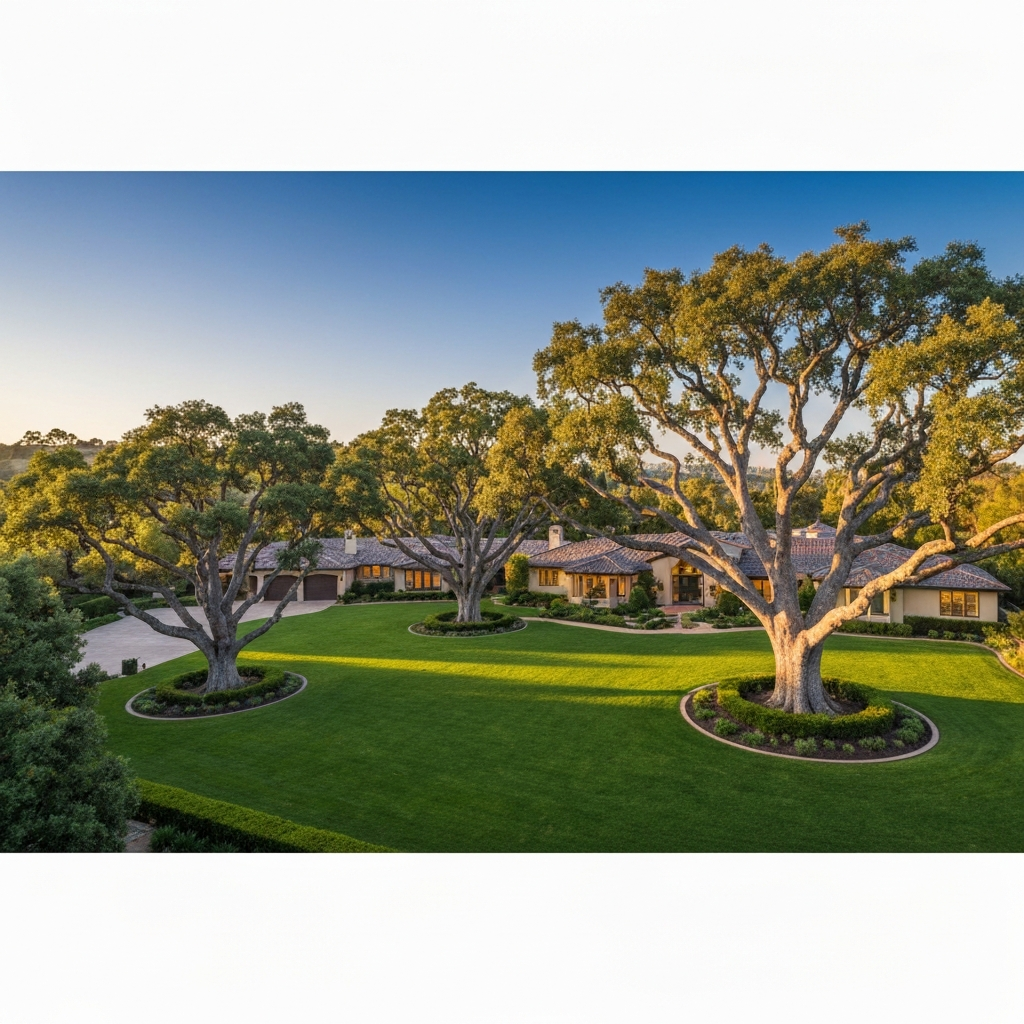
The most common mistake homeowners make is planting a lawn or water-loving plants directly beneath an oak tree canopy. The frequent, shallow irrigation required by grass will inevitably cause root rot in the oak.
Instead, leave the area beneath the oak natural. The tree's own fallen leaves provide the perfect, natural mulch that cools the soil, retains winter moisture, and recycles nutrients. If you must plant, choose drought-tolerant California natives that require no summer water once established, and plant them well away from the trunk.
Frequently Asked Questions
Should I water my mature oak tree during the summer?
Generally, native Coast Live Oaks and Valley Oaks should not be watered during the summer. They are adapted to dry Southern California summers, and warm, wet soil around the trunk is the perfect environment for fatal diseases like Oak Root Fungus (Armillaria).
What if there is a severe drought?
During prolonged, severe drought, supplemental watering may be necessary. However, water should only be applied in the outer half of the root zone (the drip line) and never near the trunk. It should be a slow, deep soak applied rarely—perhaps once a month or less.
Can I plant a lawn under my oak tree?
No. Lawns require frequent, shallow watering, which is exactly the opposite of what mature oaks need. The summer irrigation required to keep grass green will almost certainly cause root rot and eventually kill the oak tree.
What is the 'Critical Root Zone'?
The critical root zone is the area directly beneath the canopy, extending out to the drip line. The most sensitive area is the inner third closest to the trunk, which must be kept completely dry during the warm months.
How do I know if my oak needs water?
Signs of severe drought stress include smaller than normal leaves, early leaf drop, and a thinning canopy. However, these can also be signs of root disease caused by overwatering. A Certified Arborist should evaluate the tree before you change its watering regimen.
Oak Health Assessment
Concerned about drought stress or root rot? Have our Certified Arborists evaluate your oak's health and irrigation setup.
Schedule AssessmentProtect Your Heritage Oaks
Schedule a consultation with our ISA Certified Arborists to ensure your irrigation practices are supporting, not harming, your valuable trees.
Request a Free Consultation