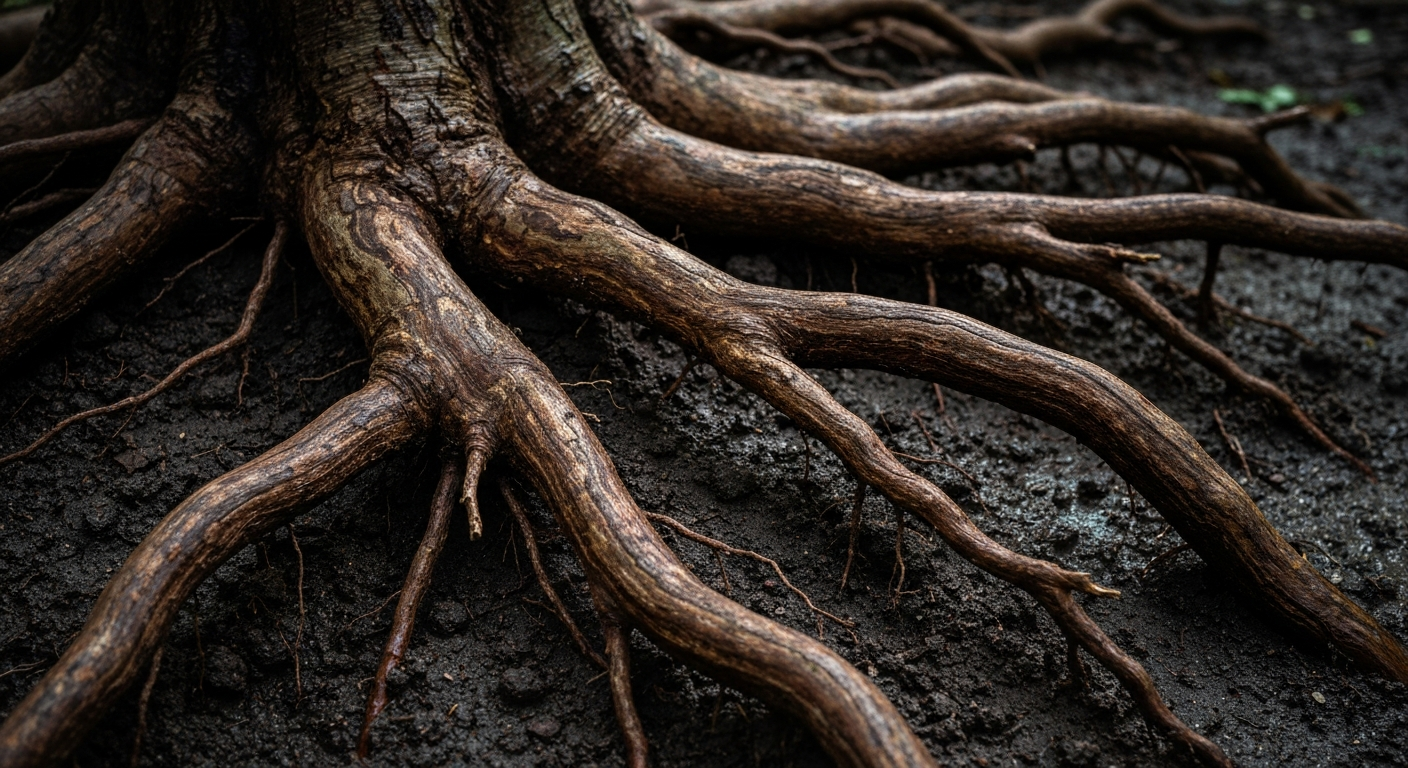
Root Rot
A deadly, soil-borne water mold that destroys root systems, usually triggered by overwatering, poor drainage, or improper planting.
The Hidden Killer Beneath the Soil
Root rot is one of the most common and tragic causes of tree death in Southern California landscapes. Because the damage happens underground, homeowners often don't realize there is a problem until the canopy begins to rapidly decline.
What causes the problem? The pathogens responsible for root rot (most notably Phytophthora) are water molds. They require saturated soil to swim and infect roots. When trees are overwatered, planted in heavy clay without drainage, or have soil piled against their trunks, these molds thrive and decay the root tissue.
Long-term consequences: As the roots rot away, the tree loses its ability to absorb water and nutrients. Ironically, a tree dying of root rot looks exactly like a tree dying of drought. If the homeowner responds by watering more, the disease accelerates, leading to total structural failure or death.
Disease Profile
- Pathogen TypeWater Mold (Oomycete)
- Primary TargetsOaks, Citrus, Avocado, Most Trees
- Environmental TriggerSaturated Soil / Poor Drainage
- Key IndicatorCanopy Decline / Base Oozing
- LethalityHigh
Warning Signs
Drought Symptoms
Yellowing leaves, wilting, and branch dieback despite the soil being wet. The dead roots can no longer drink the water.
Bleeding Cankers
Dark, sap-like fluid oozing from the lower trunk or root collar, often staining the bark black or reddish-brown.
Buried Root Flare
If the trunk goes straight into the ground like a telephone pole (no visible flare), the tree is planted too deeply and is highly susceptible.
What Can Be Done?
Treating root rot requires a two-pronged approach: correcting the environmental conditions and chemically supporting the tree's defenses.
- Root Collar ExcavationUsing an air spade to remove excess soil and mulch from the base of the trunk, exposing the root flare to drying air.
- Irrigation CorrectionImmediately reducing watering frequency and ensuring water drains away from the trunk is critical for survival.
- Fungicide TreatmentsSystemic treatments (like phosphites) can be applied to boost the tree's immune response and suppress the pathogen.
When to Call an Arborist
If your tree looks sick and the soil around it is constantly wet, call immediately. Do not add more water or fertilizer until a Certified Arborist has diagnosed the root system.
Schedule an Assessment