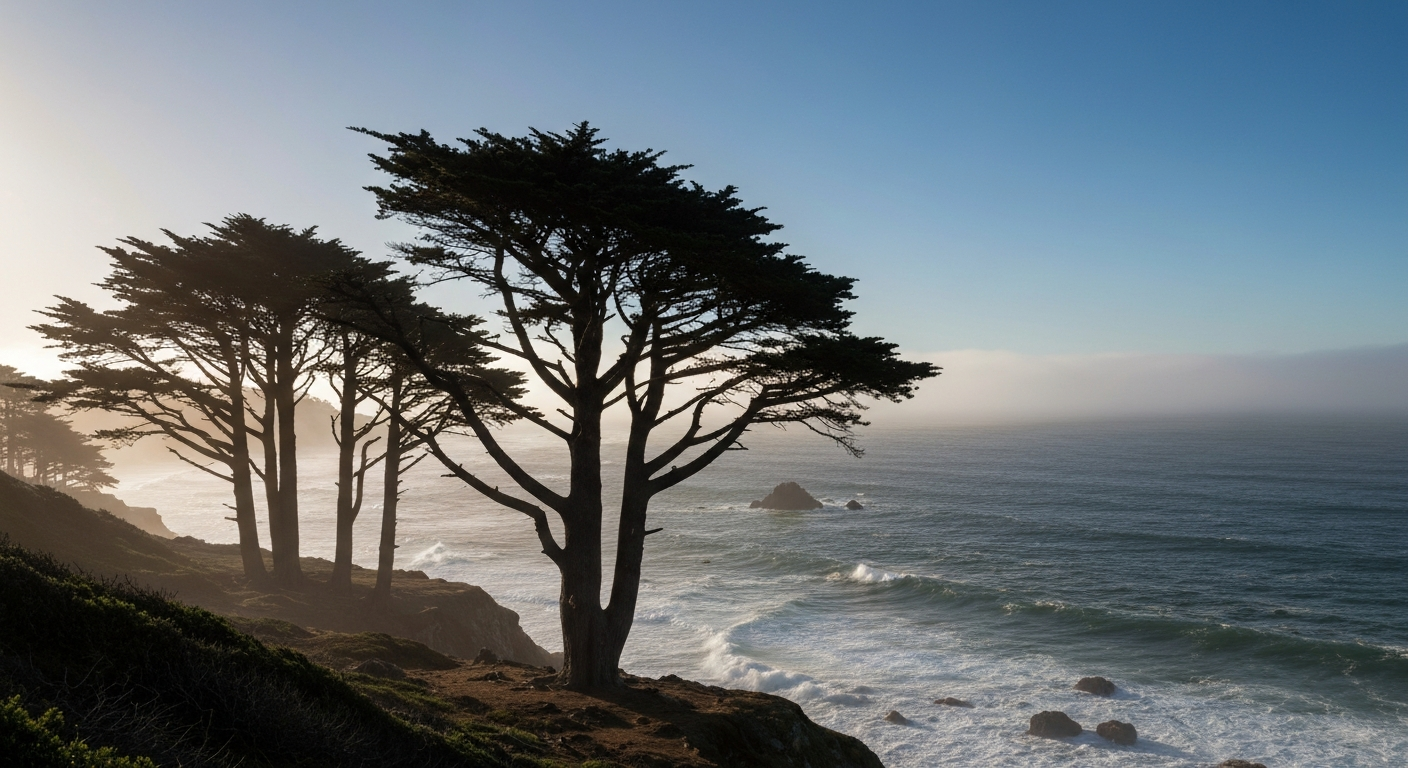
Monterey Pine
Care Guide
A California native with a critically small natural range and a devastating vulnerability to pitch canker fungus. Beautiful, fast-growing, and in need of informed care.
Understanding the Monterey Pine
The Monterey Pine (Pinus radiata) is native to only five small locations in the world — three on the central California coast (Año Nuevo, Monterey Peninsula, Cambria) and two offshore Mexican islands. It is one of the most widely planted pines in the world for timber and landscaping, yet it faces a catastrophic threat in its native range: pitch canker disease caused by the fungus Fusarium circinatum.
In Southern California, Monterey Pines are valued for their fast growth (3–5 feet per year when young), dense evergreen canopy, and ability to provide quick structure and screening in new landscapes. They're commonly found in Ventura, Santa Barbara, and coastal Los Angeles County properties, particularly those seeking rapid screening or windbreak coverage.
Understanding this species means understanding its dual nature: a remarkably vigorous grower that can become a liability within 20–30 years if not properly managed. Pitch canker, bark beetles, and structural defects are the primary concerns. With the right Plant Health Care program, these risks can be significantly reduced.
Quick Reference
How Monterey Pines Perform in Our Climate
Coastal vs. Inland
Monterey Pines prefer coastal conditions — moderate temperatures, humidity, and fog. They struggle in the intense heat of the inland valleys (Thousand Oaks, Calabasas). Best performance is within 10 miles of the coast, particularly in Ventura, Carpinteria, and Santa Barbara.
Drought Tolerance
Moderate. They require more water than Canary Island Pines. In hot inland sites without supplemental irrigation, Monterey Pines go into stress quickly — making them prime targets for bark beetles and pitch canker.
Wind Tolerance
Good. They are naturally coastal trees accustomed to persistent onshore winds. However, their rapid growth and sometimes poor crown structure can lead to large branch failures in high-wind events.
Salt Tolerance
Moderate. Tolerates coastal salt spray better than many inland species. A good choice for coastal estates, provided irrigation is appropriate to the site.
Where It's Planted
Residential screens, windbreaks, estate properties in coastal Ventura and Santa Barbara counties, golf courses, parks, and commercial landscapes seeking rapid tree cover.
Long-term Considerations
Monterey Pines planted in the 1970s–1990s are now reaching middle to late maturity. Many are showing pitch canker symptoms, structural defects, and decline. These trees require honest assessment, not just maintenance.
Common Problems With Monterey Pines
Pitch Canker Disease
Caused by the fungus Fusarium circinatum, pitch canker is the single greatest threat to Monterey Pines in California. It enters through fresh wounds — including pruning cuts, insect entry points, and mechanical damage. Symptoms include resin-soaked cankers on branches, rapid branch dieback, and eventually crown death. There is no cure. Management focuses on maintaining tree vigor through proper care and removing infected wood to slow spread. Trees with extensive canker infection should be evaluated for removal.
Bark Beetles
Western Pine Beetle and Ips beetles target stressed Monterey Pines in the same way they attack Canary Island Pines. Drought stress, pitch canker wounds, and root damage all increase vulnerability. Monitoring and maintaining tree health are the best preventives. See our full Bark Beetle guide.
Structural Defects
Monterey Pines grow rapidly and often develop codominant stems, included bark, and large lateral branches with poor attachment angles. These structural defects create significant failure risk in wind events. Structural pruning during the first 15 years dramatically reduces long-term risk.
Root Disease
Armillaria root rot (oak root fungus) can affect Monterey Pines, particularly in irrigated landscapes or sites with previous infected plant material. Symptoms include reduced growth, yellowing crown, and eventual collapse. Learn about oak root fungus.
Scale Insects
Pine needle scale and various armored scale insects infest Monterey Pine needles and stems. Infestations cause needle drop, reduced vigor, and can predispose trees to secondary bark beetle attack. Early detection and targeted treatment are effective. See our Scale Insects guide.
Drought Stress & Heat Damage
Monterey Pines placed in hot inland sites without adequate irrigation go into chronic stress. This is particularly common in properties where turf irrigation was reduced or modified without adjusting supplemental tree watering. Heat-stressed Monterey Pines in inland areas often require significant intervention or removal within 15–20 years.
Pruning Monterey Pines
Best time to prune: Late fall to early winter. Avoid spring and summer to minimize pitch canker infection risk through fresh wounds. In areas with known pitch canker pressure, pruning tools must be sterilized between cuts with a 10% bleach solution.
Pruning frequency: Every 3–4 years. Young trees benefit from annual structural training for the first 10 years to address codominant stems and poor attachment angles before they become failure hazards.
Critical priorities: Remove dead and diseased wood promptly — infected wood is a source of pitch canker inoculum. Reduce codominant stems through subordination cuts. Never lion-tail (strip interior foliage). Never top.
ANSI A300: Remove no more than 20% of live crown per pruning cycle. Document all work, especially on trees showing pitch canker symptoms.
Irrigation & Nutrition
Young trees: Deep watering every 7–10 days during the first 3 years. Apply at the drip line, not against the trunk.
Established trees: Deep watering every 2–3 weeks during dry seasons. Coastal trees in summer fog zones may need less; inland trees need more. Moisture stress is the primary predisposing factor for bark beetle and pitch canker.
Overwatering warning: Standing water or consistently wet soil promotes Phytophthora and Armillaria root rots. Soil should be moist but well-drained.
Fertilization: Annual deep root fertilization in late winter to early spring. Use a balanced slow-release fertilizer appropriate for conifers. Soil testing every 2–3 years guides amendment decisions.
Monterey Pine FAQs
What is pitch canker and can my Monterey Pine survive it?
Pitch canker is a fungal disease (Fusarium circinatum) that causes branch dieback and resin-soaked cankers on affected wood. Trees rarely die quickly from pitch canker alone — they decline over years. With proper care, stress reduction, and prompt removal of infected branches, many trees can live for decades with managed infections. However, severely affected trees should be honestly evaluated for removal.
How do I identify pitch canker on my tree?
Look for wilted, dying branch tips; resin-soaked, discolored wood at branch bases; and dead branches scattered throughout the crown. Unlike bark beetle damage which progresses top-down, pitch canker causes a scattered 'flagging' pattern throughout the crown.
Should I plant a Monterey Pine in Thousand Oaks or Calabasas?
We generally advise against it for inland valley locations. Monterey Pines evolved in cool, foggy coastal conditions. Placing them in hot inland sites creates chronic stress that leads to bark beetle infestation, pitch canker, and premature decline. Coast Live Oaks, Valley Oaks, or Canary Island Pines are better choices for inland estates.
How long will my Monterey Pine live in Southern California?
In ideal coastal conditions with proper care, 80–150 years. In stressed conditions — poor site selection, inadequate irrigation, neglected maintenance — 30–50 years is more realistic. Many Monterey Pines planted in the 1970s–1990s are now showing serious decline.
Why is my Monterey Pine losing branches randomly throughout the crown?
Random branch dieback scattered throughout the crown is a classic pitch canker symptom. It can also indicate Armillaria root rot. Either warrants an immediate professional evaluation.
Can I save a Monterey Pine with bark beetles?
Light infestations on vigorous trees may be manageable. Widespread infestation in a declining tree typically cannot be reversed. Early detection is critical — monitor annually.
How do I sterilize pruning tools when working on pitch canker-infected trees?
Dip or wipe cutting surfaces with a 10% bleach solution (1 part bleach, 9 parts water) between every cut. Allow contact time of at least 30 seconds. This prevents spreading the fungal pathogen from infected to healthy wood.
What are the signs that my Monterey Pine needs removal?
Primary indicators: widespread pitch canker with more than 30% crown dieback; bark beetle infestation throughout the main stem; root rot causing lean or instability; structural defects with high failure probability in locations where failure would cause injury or damage. A formal risk assessment by an ISA Certified Arborist is the appropriate process.
Related Resources
Concerned About Your Monterey Pine?
Pitch canker and bark beetles can move quickly. Our ISA Certified Arborists provide thorough health evaluations and honest recommendations.
Schedule a Free Consultation